Agricultural production
Seasonal Fruits and Vegetables: Calendar & Benefits
March 22, 2026
Every season has its own scents, colors, and flavors. Even in the fields of our farm, the land follows nature’s rhythm: in winter it rests, in spring it sprouts, in summer it bursts with fruit, and in autumn it prepares for a new cycle. Growing and eating seasonal fruits and vegetables means respecting this ancient balance, supporting a form of agriculture that is healthier for us and for the environment.
In our gardens in Diano Marina, Liguria, we grow different varieties every month—from DOP basil to beefsteak tomatoes, from zucchini to eggplant—following a natural calendar that highlights the quality and authentic flavor of local produce.
In this article, we’ll tell you what we grow throughout the year, when we plant, and the benefits of choosing truly seasonal produce.
A close-up of the white eggplant with a view of the Gulf of Diano
Why Choose Seasonal Fruits and Vegetables
Choosing seasonal fruits and vegetables isn’t just a matter of taste; it’s an act that reflects respect for nature and awareness of what we put on our tables. Produce harvested at its peak is richer in nutrients, more fragrant, and more sustainable, as it doesn’t require forced cultivation or long-distance transport. Let’s explore all the reasons why it’s worth following the rhythm of the seasons at the table.
Quality
There are several reasons to choose seasonal fruits and vegetables, and they all benefit the consumer. First and foremost, the organoleptic qualities of the produce benefit. Active compounds and nutrients are present in greater quantities; the flavor is also significantly better, in terms of intensity and sweetness. The high perishability of our agricultural products is certainly a drawback from a preservation standpoint. However, adhering to the principle of seasonality also means enjoying the freshness of the produce, which should be consumed quickly.
Savings
Another major reason is economic. The concept of seasonality is closely linked to that of local production and sales, which ensures a shorter distance between the farmer and the consumer. This inevitably leads to reduced expenses—especially those related to transportation—and thus to a lower final cost for agricultural products.
Even when there is an intermediary—and in our case, there is always only one, whether a supermarket or a wholesaler—the buyer is protected by the label. This requires us, in the case of DOP basil for example, to also indicate in which greenhouse the plants were harvested.
Basil as a tool for promoting Liguria
Environment
Seasonal produce is also less expensive because it requires less processing: farmers don’t need to do much when nature nourishes the soil on its own.
Finally, there is the environmental factor. We are well aware, in fact, of how much the transportation required to provide us with out-of-season fruit contributes to CO2 emissions.
To summarize, the benefits of seasonality cover several aspects:
1. Quality and health: seasonal products have greater nutritional and sensory properties, which benefit health
2. Savings: by cutting transportation and storage costs, the price for the end consumer is reduced
3. Environment: buying seasonal products means reducing CO2 emissions linked to transportation
4. Local economy: seasonality is closely tied to the “zero-mile” principle, and thus supports the local economy and local production

The Seasonal Calendar for Our Vegetables
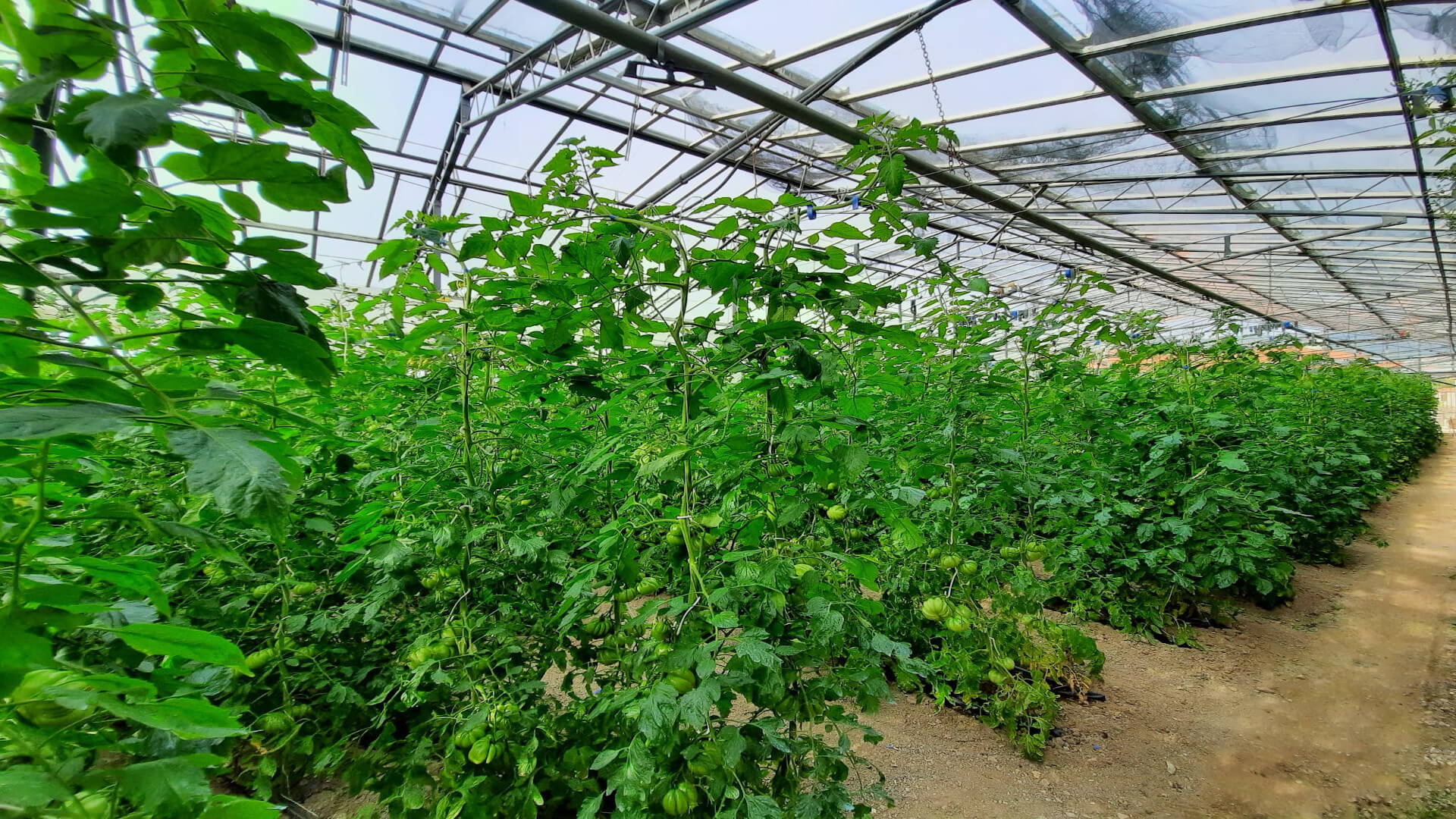
All our products are in season. Only Genoese DOP basil, in accordance with the regulations, is grown year-round in greenhouses. The other vegetables follow the natural cycle of the seasons, including beefsteak tomatoes, which are also grown in greenhouses.
Here is our production calendar, the result of work that combines tradition, experience, and care for the environment.
All year round:
• Basil
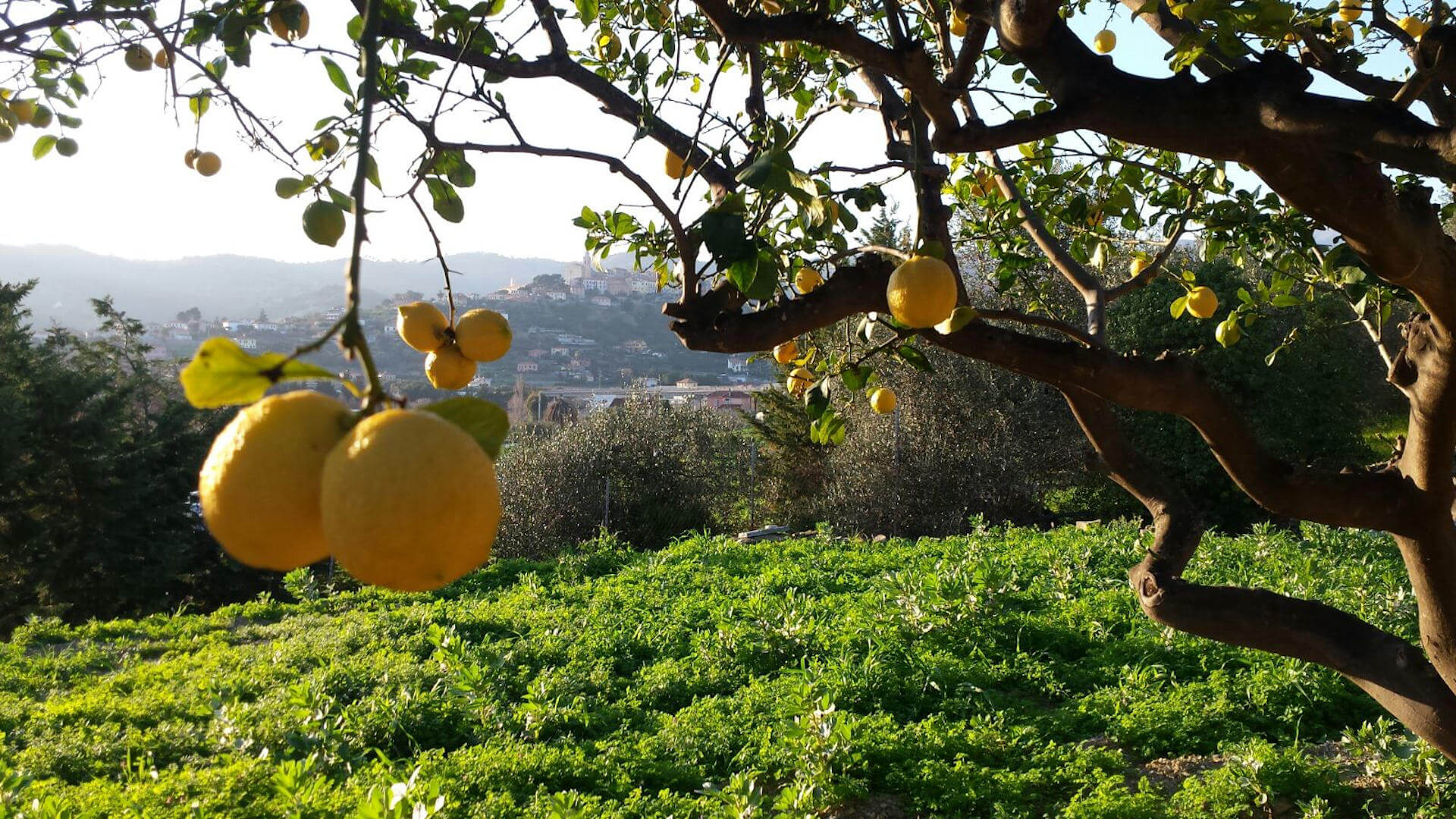
• Lemons
Spring – Summer:
• Oxheart tomatoes (April 20 – October 15)
• Eggplants (July 1 – September 15)
• Bell peppers (July 1 – September 15)
• Trombetta zucchini (May 20 – October 1)
Winter – Spring:
• Broad beans (March 15 – May 1)
• Artichokes (December 15 – April 20)
Growing according to the seasons allows us to offer fresh, wholesome produce, harvested only when nature is ready to provide it. A simple yet effective way to rediscover the true essence of Ligurian flavors.

Production Techniques for Our Seasonal Fruits and Vegetables
The climate of our region, Liguria, allows us to ensure a long-term supply of our vegetables. Oxheart tomatoes and trombetta zucchini, for example, are available across three seasons.
Seeding of agricultural products naturally takes place well in advance:
1. January: beefsteak tomatoes (planted a second time in early June as well)
2. April–May (and mid-July): trombetta zucchini
3. June: eggplants and bell peppers
4. August: artichokes
5. October: broad beans
Essentially, we don’t tend our land any differently than our grandparents did. Certainly, the experience we’ve gained over the years and modern technology come to our aid. In particular, we’re supported by an agricultural technician who checks the health of our plants every 10–15 days and determines whether to intervene to improve their performance, using fertilizers permitted in organic farming.
Our basil, for example, undergoes periodic inspections to maintain its DOP designation; for greenhouse-grown tomatoes, we rely on bumblebees to pollinate the plants, rather than artificial hormones; broad beans and artichokes require little attention, since insect activity is practically nonexistent during the growing season for these vegetables.
Over the years, we have increased the frequency with which we prune the tomatoes, using a mechanical process—known as “sfemminellatura”—that requires time and effort but is highly beneficial in terms of yield.
On cloudy days, we frequently check the humidity levels in the basil greenhouses. To prevent the onset of diseases caused by waterlogging, we ensure proper ventilation and allow the soil to dry out.
Finally, we monitor the condition of weeds and grass. While these are harmful to tomatoes and basil and must be removed immediately, in the artichoke and broad bean fields we allow these plants to grow freely on purpose, as they shield the vegetables from the sun, preserving their tenderness.

Why and How to Buy Directly from Us
Buying seasonal fruits and vegetables directly from our farm means choosing authentic, freshly harvested produce, carefully grown in Liguria on the fields of Agriturismo Le Girandole.
Direct sales allow us to offer consistently fresh produce, reducing waste and shortening the supply chain: from producer to consumer, with no middlemen. In this way, you support local and sustainable agriculture, based on respect for natural cycles and the promotion of the Gulf of Diano area.
You can visit us on the farm, get an up-close look at our production, and choose the seasonal products you prefer, or contact us directly for information and availability. Discover all the details about our direct sale of agricultural products.
Zero-mile products: what it really means and why they make a difference
When we talk about zero-mile products, we’re referring to food grown, harvested, and sold within the same region, without long-distance transport or middlemen. This is the case with our vegetables, which are sown, tended, and harvested directly in our fields in Diano Marina, arriving fresh on our customers’ tables within a few hours.
Choosing zero-mile products means reducing environmental impact, as it limits transport-related emissions and avoids the use of unnecessary packaging.
But the benefits don’t stop there: the short supply chain guarantees greater freshness, authentic flavor, and support for the local economy, rewarding the work of those who farm with respect for the land. Furthermore, buying directly from the farm allows you to know the true origin of the food and to rediscover the value of human connection—something that only a direct relationship between producer and consumer can offer.
A stroll through rows of broad beans
How to Best Store Seasonal Fruits and Vegetables
Every vegetable has its own season and specific needs, and storing it properly is essential to preserving its flavor, aroma, and nutritional value. At our farm, too, we pay close attention to how we store our produce after harvest, ensuring it always reaches our customers fresh.
Genoese PDO basil, grown year-round in greenhouses, is very delicate: it should be consumed fresh, within a few days of harvest. To store it best, it is advisable to keep it in a glass of water at room temperature, away from direct light and drafts, or wrap it in a slightly damp cloth inside a paper bag—never plastic.
Oxheart tomatoes should not be kept in the refrigerator: the cold compromises their texture and sweetness. It is best to store them at room temperature, in a basket or on a plate, away from direct sunlight.
Trombetta zucchini, bell peppers, and eggplants can be stored in the refrigerator for 3–4 days, in the vegetable crisper. It is important not to wash them before storing them, to prevent moisture buildup. If they are too ripe, you can grill or cook them and store them in the refrigerator in airtight containers for a couple of days.
Artichokes, typical of winter and spring, will keep for 3–5 days in the refrigerator, wrapped in a paper bag or with their stems submerged in a little water. Broad beans, harvested in the spring, should also be eaten very fresh: once shelled, they can be stored in the refrigerator for no more than two days.
Finally, lemons—which grow on our trees year-round—keep well at room temperature for more than a week. For longer storage, it’s best to keep them in the refrigerator, in the crisper drawer, away from other fruits that release ethylene (such as apples).
Trumpet Zucchini from Le Girandole Farmstay
FAQ – Frequently Asked Questions About Seasonality
Why is it better to eat seasonal fruits and vegetables?
Because produce grown during its natural growing season is richer in flavor and nutrients. It doesn’t require heated greenhouses or long-distance transport, so it has a lower environmental impact and retains its full nutritional value.
Is out-of-season fruit and vegetables bad for you?
It’s not dangerous, but it often comes from far away or from intensive farming that requires more resources and treatments. By choosing local, in-season produce, you reduce emissions and waste, while also enjoying greater freshness and quality.
How can I tell which products are in season?
The easiest way is to look at what grows naturally in the area. In our article, you’ll find the production calendar for Le Girandole Farm, which lists month by month the vegetables grown in our fields in Diano Marina, on the western Ligurian Riviera.
Can I buy seasonal vegetables directly from the farm?
Yes! At our farm in Liguria, you can purchase vegetables and DOP basil directly from the producer. Just come visit us or contact us to find out about availability and current products.
Does eating seasonal vegetables really make a difference?
Absolutely. It’s a simple choice that supports the local economy, protects biodiversity, and ensures authentic flavors. Eating seasonally means respecting nature and bringing better, more sustainable foods to the table.
Listen to all podcasts published on our official channels: