Discovering the Ligurian Riviera
Villa Ormond, Sanremo: What to See in the Botanical Park
March 14, 2026
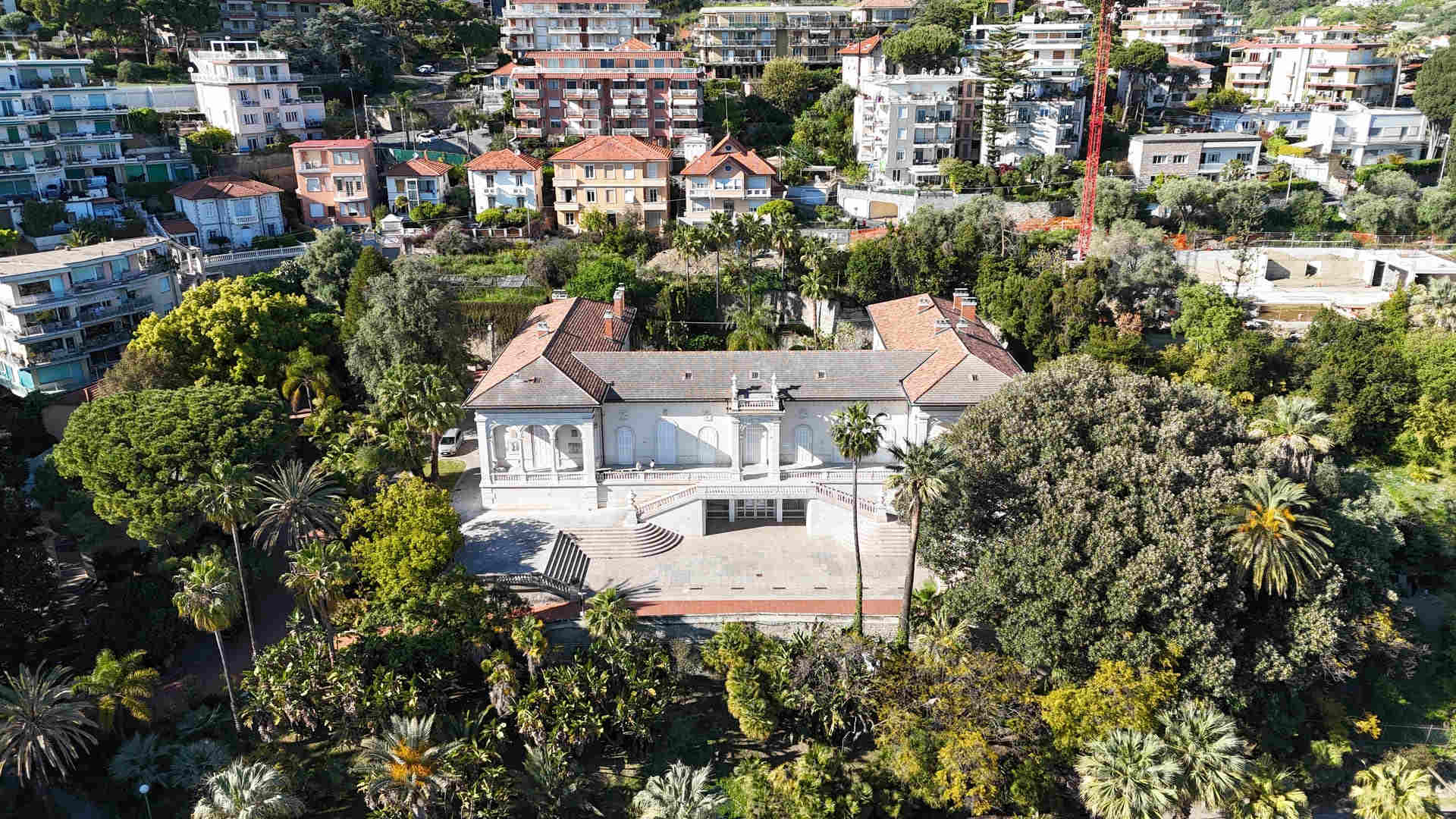
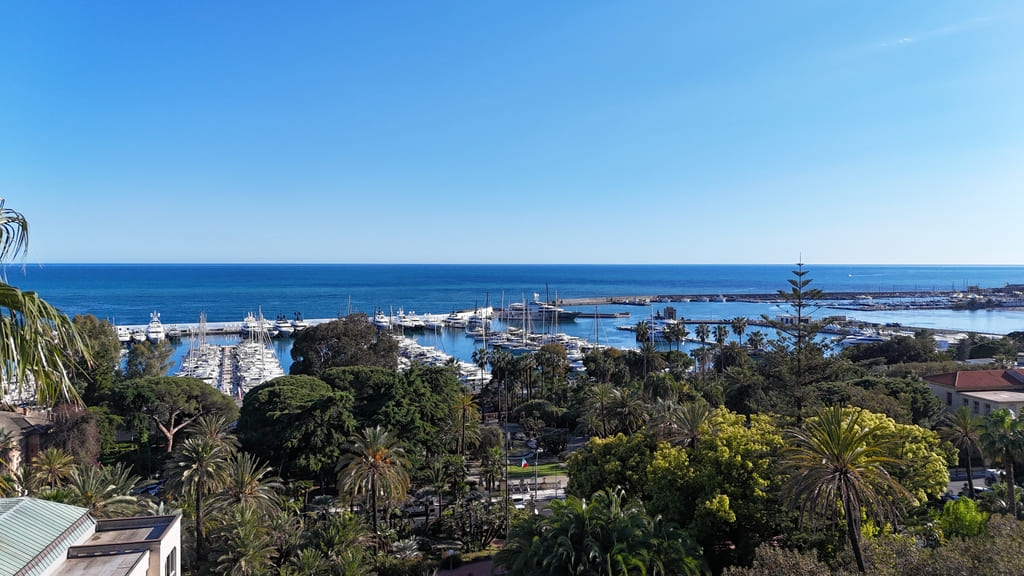
Among the many green corners of Sanremo, Villa Ormond is one of the most surprising: a large botanical park just a few steps from the sea. Located a short distance from the railway station, this historic residence is surrounded by one of the richest and most scenic botanical parks on the Ligurian Riviera. Strolling through the gardens of Villa Ormond in Sanremo, you will encounter monumental palm trees, exotic plants from all over the world, shaded avenues, and panoramic views that reveal the deep connection between the city of flowers and its botanical tradition.
The park is divided into two areas separated by Corso Cavallotti: one part closer to the sea, overlooking the famous Riviera dei Fiori cycle path, and a larger area that houses the historic villa, the Floriseum - Sanremo Flower Museum, and the charming Japanese garden. Visiting Villa Ormond means immersing yourself in a place where nature, history, and culture intertwine, offering one of the most pleasant walks on the Riviera di Ponente.
- Where is Villa Ormond
- The history of Villa Ormond
- The gardens of Villa Ormond in Sanremo: a botanical park in the heart of the city
- The Floriseum: Sanremo Flower Museum
- What to see in the park of Villa Ormond
- Eva Mameli Calvino and botanical research in Sanremo
- Visiting Villa Ormond: useful information
- Tips for visiting Villa Ormond
Where is Villa Ormond [ back to menu ]
Villa Ormond is located in Sanremo, at Corso Cavallotti 113, in a location that is very easy to reach from both the city center and the seafront. The park is divided into two separate areas by Corso Cavallotti: one part is located towards the sea, next to the Riviera dei Fiori cycle path, while the upper area houses the historic villa, the botanical gardens, and the Floriseum - Flower Museum. In addition, Sanremo railway station is about 700 meters away, so it is easy to reach on foot.
For those staying in the Gulf of Diano, the park is about 35 km from Diano Marina. In about 40 minutes by car, you can organize a trip to discover this beautiful historic garden starting from Agriturismo Le Girandole (discover our vacation apartments in Diano Marina), an ideal solution for exploring the Riviera dei Fiori and visiting some of the most interesting places in western Liguria, including Sanremo itself.
Sanremo and its park
The history of Villa Ormond[ back to menu ]
The history of Villa Ormond dates back to the second half of the 19th century, when this part of the city was still occupied by citrus groves, olive groves, and small rural buildings. The Napoleonic land registry of 1812 records the presence of agricultural land belonging to the Rambaldi family of Sanremo, who owned a modest villa surrounded by greenery.
In 1875, the property was purchased by Swiss entrepreneur Michel Louis Ormond, who was involved in the tobacco and cigar trade and decided to move to Sanremo with his French wife Marie Marguerite Renet. At that time, the Ligurian Riviera was becoming a popular destination for the European aristocracy, attracted by the mild climate and beautiful landscape.
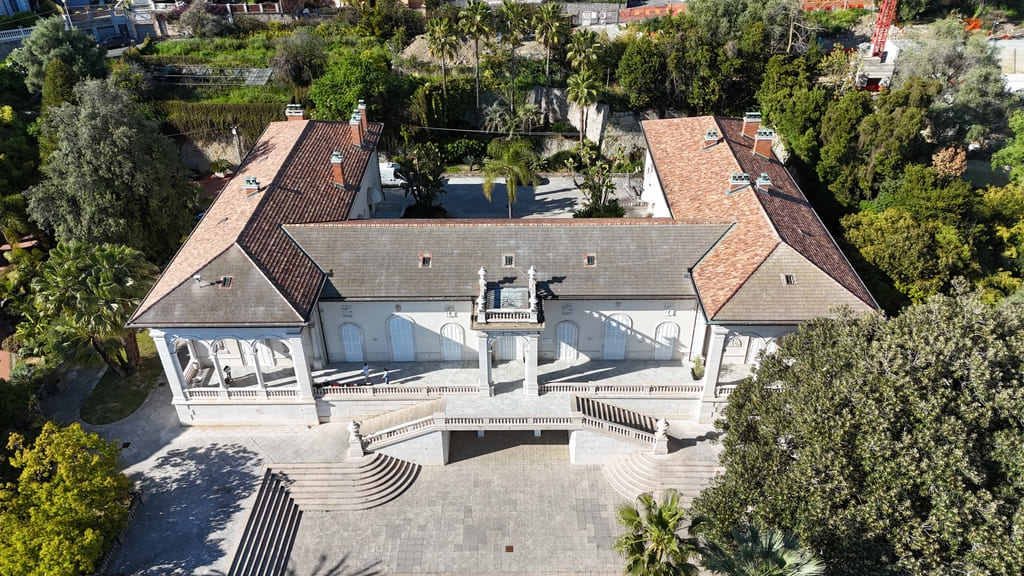
The original residence suffered severe damage during the 1887 earthquake, an event that hit the entire Riviera di Ponente hard. The Ormonds therefore decided to build a new residence and entrusted the project to Swiss architect Emile Réverdin, who designed a villa in classic French style. The building was completed between the late 19th and early 20th centuries and was located in a panoramic position above the large park.
The garden was designed according to the French landscape style of the time and completely transformed the original landscape. The Ligurian terraces and citrus groves were replaced by an intricate design of avenues and green spaces organized as veritable “rooms” of vegetation: palm groves, areas dedicated to cedars, avenues of ficus trees, and large panoramic areas. During this period, numerous exotic plants were introduced, many of which can still be seen in the park today.
Over the years, Villa Ormond hosted many illustrious figures, including members of the European aristocracy such as the Princes of Prussia, the Duke of Aosta, and Empress Elisabeth of Austria, better known as Sissi.
After the death of Marie Marguerite Renet Ormond in 1925, the property was purchased by the Municipality of Sanremo between 1928 and 1930. From that moment on, the park was opened to the public and the villa began to be used for cultural initiatives and events. Today, the building houses the offices of the International Institute of Humanitarian Law, founded in Sanremo in 1970, while the park continues to be one of the city's most important green spaces and one of the symbolic places of the Riviera dei Fiori.
Villa Ormond Sanremo
The gardens of Villa Ormond in Sanremo: a botanical park in the heart of the city[ back to menu ]
The park of Villa Ormond in Sanremo is one of the largest and most scenic green spaces in the city and is a veritable open-air botanical garden. The park we see today is the result of over a century of botanical work and experimentation that has transformed this area into a veritable garden rich in species from all over the world.
Thanks to the particularly mild climate of the Riviera di Ponente, many exotic plants have adapted perfectly to the local environment. Around 245 species, hybrids, and horticultural varieties have been recorded in the gardens of Villa Ormond, most of which are exotic but some of which are native, creating a botanical heritage of great scientific and landscape value.
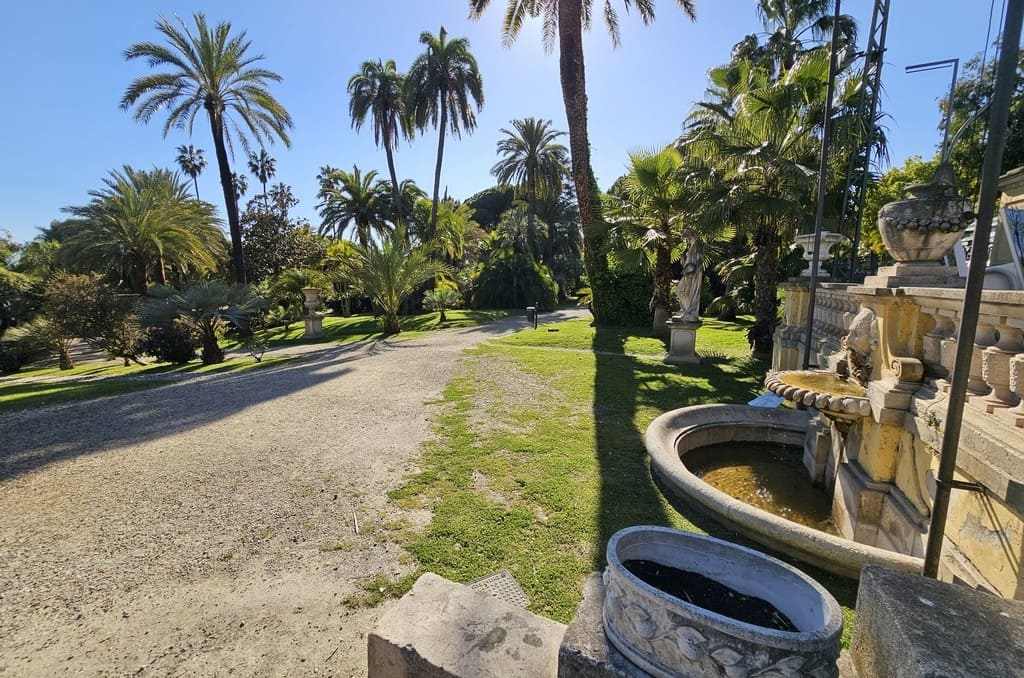
The park is spread over several levels and alternates between large lawns, tree-lined avenues, and themed areas with different plant environments. Walking along its paths, you will encounter palm groves, areas dedicated to cedars, ancient olive groves, and panoramic views that make a visit particularly enjoyable in every season.
Monumental palm trees and exotic species[ back to menu ]
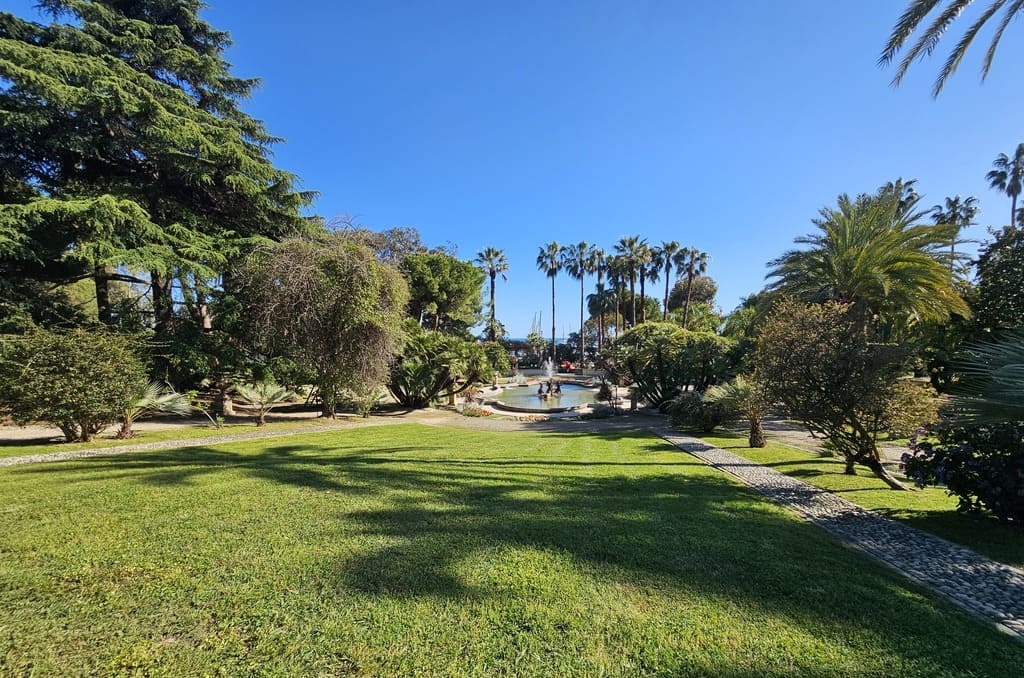
One of the most characteristic features of the park is itsrich collection of palm trees, one of the most significant on the Ligurian Riviera. Palm trees, which the naturalist Linnaeus called the “princesses” of the plant world for their elegant bearing, include over 2,800 species, mainly found in tropical regions.
These plants were introduced to Sanremo mainly during the 19th century, when botanists and acclimatization experts began experimenting with the cultivation of exotic species in the gardens of villas frequented by the European aristocracy. Among the botanists who studied the species present in the gardens of Sanremo, Karl Von Huttner, author of the 1884 work Gartenflora des Klimaschen Winter-Kurorts San Remo, dedicated to the plants of the city's acclimatization gardens, is particularly noteworthy.
Today, in the gardens of Villa Ormond, you can see specimens over a hundred years old belonging to different genera, including Phoenix, Brahea, Chamaerops, Butia, Howea, Jubaea, Livistona, Trachycarpus, and Washingtonia. In particular, Phoenix dactylifera, the date palm of North African origin, has become one of the symbols of the city over time and is also depicted in the medieval coat of arms of Sanremo.
The main plants in the park[ back to menu ]
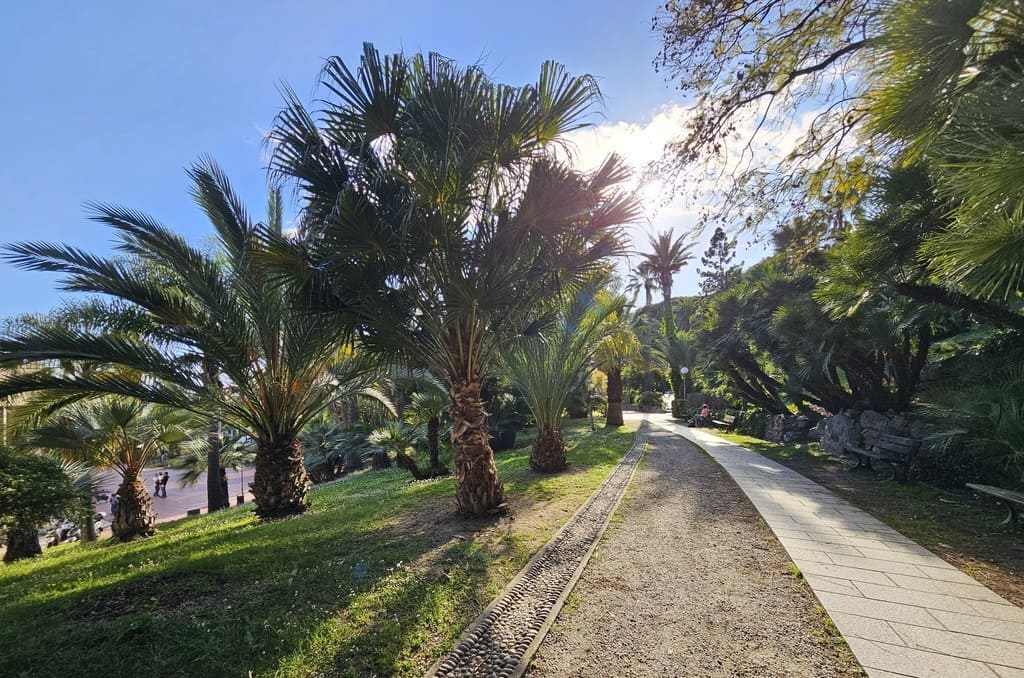
In addition to palm trees, the park is home to an extraordinary variety of trees and ornamental plants from different continents. Among the most interesting species are Lebanese cedars, magnolias, cypresses, domestic pines, and monumental ficus trees, alongside numerous varieties of tropical and subtropical plants.
The species present in the park also include bougainvillea, wisteria, hibiscus (Chinese rose), coral trees, dragon trees, and various varieties of palm trees from America, Africa, and Asia, such as the California palm, the queen palm of Brazil, and the Chilean palm. There are also particularly spectacular ornamental species such as Strelitzia reginae, also known as the bird of paradise flower.
This great botanical variety makes Villa Ormond Park one of the most interesting places in Sanremo, not only from a landscape point of view, but also from a scientific one, offering visitors the opportunity to observe rare species and plants from different parts of the world up close.
Villa Ormond Park, Sanremo
The Floriseum: Sanremo Flower Museum[ back to menu ]
Inside the grounds of Villa Ormond is the Floriseum – Sanremo Flower Museum, a space dedicated to the history and development of floriculture on the Riviera dei Fiori (Flower Riviera). The museum is housed in Villino Winter, a building designed in 1895 by architect Emile Reverdin as a guest house for the Ormond villa.
Next to the building is the Prediali Art Nouveau greenhouse, used for temporary exhibitions and events.
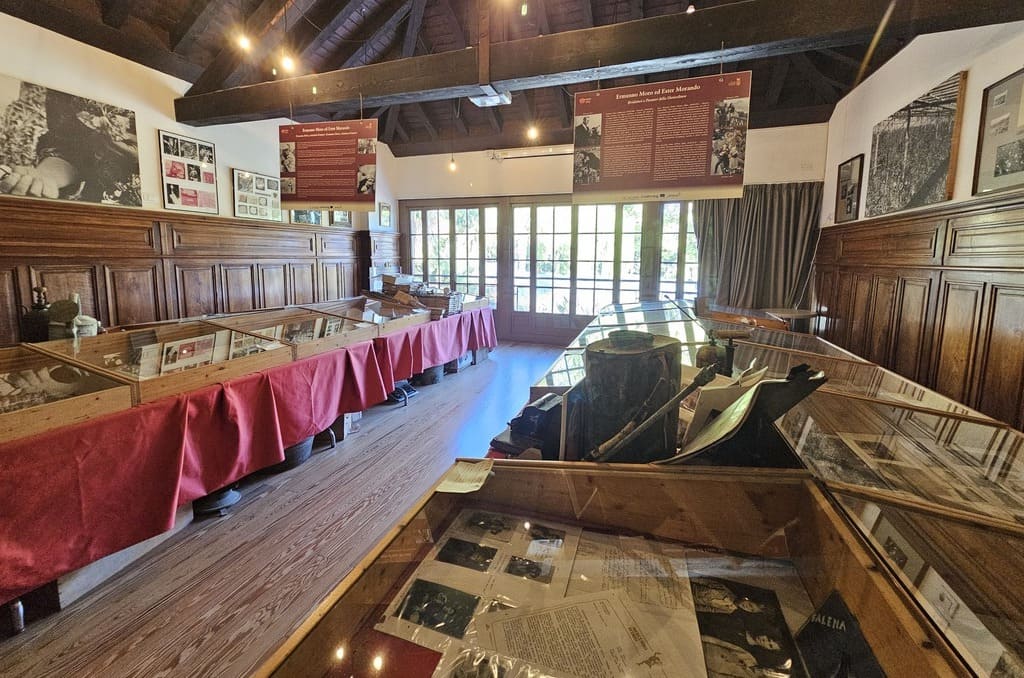
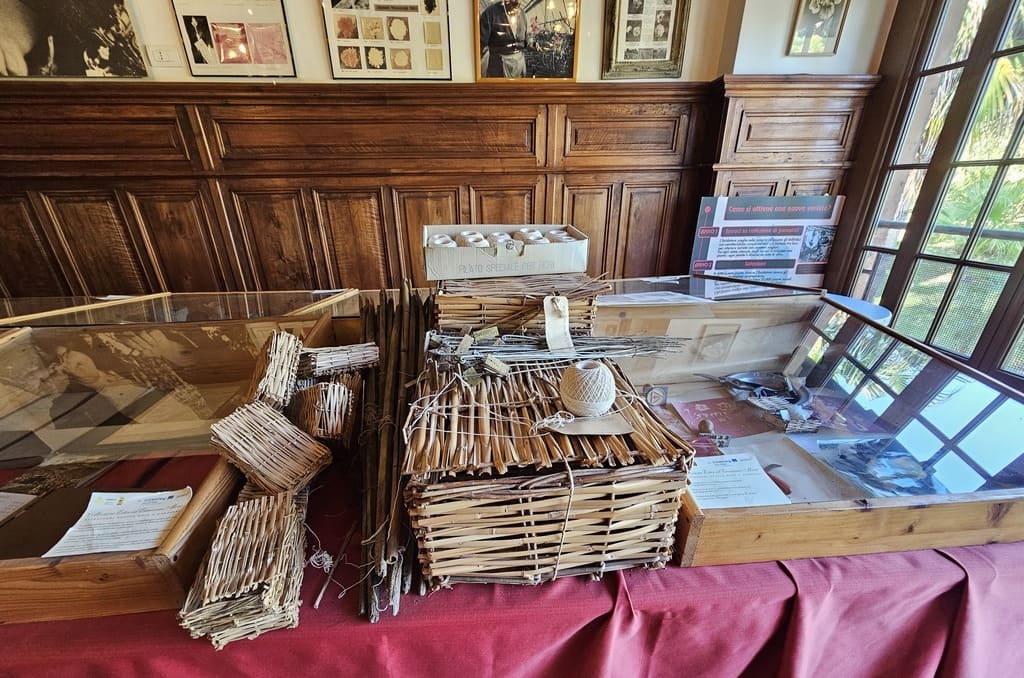
The Floriseum was created with the aim of recounting the strong link between Sanremo and floriculture, a sector that has been one of the economic and cultural pillars of the area for over a century. The exhibition includes historical photographs, documents, work tools, and materials related to the cultivation and trade of flowers, offering a complete overview of the evolution of this sector.
At the museum entrance, visitors are greeted by an introductory film dedicated to the city and the local floricultural tradition, while a multimedia totem allows them to discover some of the botanical species present in the park of Villa Ormond. The museum is managed with the support of a scientific committee involving the Municipality of Sanremo, the University of Genoa, the Regional Institute for Floriculture, and CREA - Center for Horticulture and Floriculture Research, institutions committed to the study and enhancement of the area's botanical heritage.
For more information on the museum's activities, visit the official website of the Floriseum - Sanremo Flower Museum or the dedicated page on the Sanremo City Council website.
The history of floriculture in Sanremo[ back to menu ]
For over a century, floriculture has been one of the distinctive features of the western Ligurian Riviera. Between the late 19th and early 20th centuries, thanks to the mild climate and the presence of rail links with the rest of Europe, the cultivation of cut flowers experienced extraordinary growth.
Local producers began exporting violets, roses, and carnations to major European capitals, creating a very dynamic flower market. The Floriseum recounts this evolution through period photographs, agricultural tools, and objects related to the processing and transport of flowers, such as the traditional cane baskets used to ship flowers on trains bound for France, Germany, and England.
The museum also dedicates space to the research and experimentation that contributed to the development of local floriculture. Among the protagonists of this story are scholars and hybridizers such as Mario Calvino, Domenico Aicardi, Quinto Mansuino, and Ermanno Moro, who played a fundamental role in the selection of new flower varieties.
Ermanno Moro and the famous ‘Ester’ carnation[ back to menu ]
One of the most important parts of the Floriseum collection comes from the donation of documents belonging to carnation hybridizer Ermanno Moro, offered to the Municipality of Sanremo by his wife Ester Morando. This archive now constitutes a significant part of the museum's heritage and is kept on the upper floor of Villino Winter.
Ermanno Moro was one of the leading figures in 20th-century Ligurian floriculture and achieved fame thanks to the creation of new varieties of carnations for the international market. Among these, the famous “Ester” carnation, dedicated to his wife, stands out. This variety is particularly appreciated for its resistance to long transport, fungal diseases, and insect attacks.
The success of this flower helped to strengthen the role of the Riviera dei Fiori in the European flower trade. The ‘Ester’ carnation, also known for the quality and size of its flowers, became very popular in floral arrangements and bridal bouquets, consolidating the international reputation of Sanremo's flower production.
Floriseum opening hours[ back to menu ]
The Floriseum – Sanremo Flower Museum is open to the public from Tuesday to Sunday at the following times:
• 10:00 a.m. – 12:30 p.m.
• 3:30 p.m. – 6:00 p.m.
Inside the building, there is also the Floricaffé, a café where you can stop for a break during your visit to the Villa Ormond park.
Opening hours may vary during events or temporary exhibitions, so it is advisable to check for updates on the museum's official website before planning your visit.
What to see in the park of Villa Ormond[ back to menu ]
A walk in the park of Villa Ormond in Sanremo allows you to discover one of the most evocative green spaces on the Ligurian Riviera. The garden is spread over several levels and alternates between large lawns, tree-lined avenues, palm groves, and panoramic areas, offering ever-changing views along the way.
The green area, designed in the French landscape style of the second half of the 19th century, is organized into distinct plant environments that create a sort of succession of botanical “rooms”: from the palm grove to the cedar area, to the avenues of ficus trees and large open areas. In addition to its botanical richness, the park also features architectural elements and spaces dedicated to culture and events.
The part of the park facing the sea[ back to menu ]
One of the most pleasant areas of the Villa Ormond park in Sanremo is the lower part, facing the sea. This area borders directly on the Riviera dei Fiori cycle path and is characterized by wide tree-lined avenues, ornamental fountains, maritime pines, and numerous palm trees, which contribute to creating a particularly evocative environment.
Thanks to its proximity to the cycle path, the park is often an ideal stop during a walk or bike ride along the coast. In fact, one of the most scenic stretches of the Riviera dei Fiori cycle path passes right here, a route much loved by both tourists and locals alike.
Villa Ormond Park, Sanremo, seaside side
The Japanese Garden[ back to menu ]
One of the most fascinating corners of the park is the Japanese Garden at Villa Ormond, created as a symbol of friendship between the city of Sanremo and the Japanese city of Atami. This space was designed according to the principles of traditional Japanese gardens, where natural elements such as stone, water, and vegetation are harmonized to create an environment of tranquility and contemplation.
The garden also represents a reminder of the strong cultural link between Japan and the Riviera dei Fiori, where for over a century the cultivation of ornamental plants and flowers has fostered international exchanges and relations. This corner of the park is often considered one of the most evocative places in Villa Ormond, ideal for a short break during your visit.
The greenhouses and event spaces[ back to menu ]
The park also features several historic greenhouses, including the Prediali Art Nouveau greenhouse connected to the Floriseum, which is used for temporary exhibitions and cultural initiatives. Over the years, these spaces have hosted botanical exhibitions, cultural events, and events related to the world of floriculture.
Villa Ormond is currently the focus of a development project that aims to transform the complex into an important cultural and tourist center. Through the Villa Ormond Events project, promoted in collaboration with the International Institute of Humanitarian Law, conferences, workshops, exhibitions, and cultural events are organized, helping to make the park a lively and dynamic space.
The park also has a gym used by several local sports clubs, where activities such as volleyball, basketball, and martial arts are practiced, a sign of how this green space is not only a tourist attraction but also a reference point for the daily life of the city.
More information on the initiatives and events hosted in the complex is available on the official website of Villa Ormond.
Monuments and panoramic views of the park[ back to menu ]
In addition to its botanical wealth, the park also hosts several monuments and panoramic viewpoints that enrich the visitor experience. These include monuments dedicated to historical figures such as Ignacio Manuel Altamirano, a Mexican writer and politician, and Nicholas I of Montenegro, a sovereign who had relations with the Ligurian Riviera.
Strolling along the tree-lined avenues, you will also come across large lawns and panoramic viewpoints that allow you to observe the park in its entirety, with the villa dominating the upper part of the garden. Thanks to its size and variety of natural environments, Villa Ormond is one of the ideal places for a relaxing walk in Sanremo, just a few steps from the sea and the Riviera dei Fiori cycle path.
Eva Mameli Calvino and botanical research in Sanremo[ back to menu ]
The history of floriculture and botanical research in Sanremo is also linked to Eva Mameli Calvino, one of the most important Italian scientists of the 20th century in the field of botany. Born in Sassari on February 12, 1886, she graduated in Natural Sciences in 1907 from the University of Pavia, dedicating her early studies to the physiology of nitrogen assimilation, plant biochemistry, and lichenology.
In 1920, she married Mario Calvino, an agronomist and botanist who was then director of the Experimental Agronomic Station of the Republic of Cuba. During her time in Cuba, Eva Mameli Calvino was head of the botany department and focused in particular on the physiology, anatomy, and hybridization of sugar cane, contributing to the development of important agronomic research.
In 1925, the couple returned to Italy when Mario Calvino was appointed director of the Orazio Raimondo Experimental Station for Floriculture in Sanremo. Here, Eva Mameli Calvino worked as a botanical assistant and initiated several studies related to floriculture, a sector that was becoming central to the economy of the Riviera dei Fiori (Flower Riviera) at that time.
Among the most important research conducted in Sanremo were studies on the germination of rose seeds, the floral biology of acacias, and diseases of ornamental plants. Meanwhile, between 1926 and 1928, she also taught at the University of Cagliari, becoming the first woman in Italy to obtain a university chair in botany.
After her husband's death in 1951, Eva Mameli Calvino took over the management of the Experimental Institute for Floriculture in Sanremo, a position she held until 1959. Her work contributed significantly to the development of botanical studies and floriculture in Liguria, strengthening Sanremo's role as one of the main centers of floricultural research and production in Europe.
Visiting Villa Ormond: useful information[ back to menu ]
The park of Villa Ormond in Sanremo is one of the most pleasant places in the city for a walk among nature, history, and botany. Thanks to its large tree-lined avenues, botanical collections, and panoramic spaces, it is an ideal destination for both a short visit and a relaxing break during a day exploring Sanremo.
Before planning your visit, it is useful to know some practical information about the park's opening hours, the events hosted throughout the year, and how to access it.
Park hours[ back to menu ]
The Villa Ormond park is generally open every day with free admission. Hours may vary slightly depending on the season, but the park is usually open from morning until sunset.
Within the park, there are also some structures that can be visited at specific times, such as the Floriseum - Sanremo Flower Museum, which follows its own opening schedule. For any updates on opening hours, please consult the dedicated page on the Sanremo City Council website.
Events at Villa Ormond[ back to menu ]
In addition to being one of the city's main public gardens, Villa Ormond hosts numerous cultural and scientific initiatives throughout the year. The complex is used for exhibitions, conferences, meetings, and activities related to the world of botany and floriculture.
The villa also houses the International Institute of Humanitarian Law, which organizes courses and seminars with experts and representatives of international institutions. Alongside these institutional activities, cultural events, exhibitions, and initiatives open to the public are sometimes organized in the park.
Up-to-date information on events and activities hosted in the complex is available on the official Villa Ormond website.
Price and tickets to visit Villa Ormond[ back to menu ]
One of the unique features of Villa Ormond in Sanremo is that the park can be visited free of charge. Admission to the gardens is free, allowing anyone to stroll along the tree-lined avenues and discover the park's rich botanical variety.
Tickets may only be required for temporary exhibitions, events, or visits to the Floriseum, which has separate management and opening hours from the park. For this reason, we recommend checking the official websites for any updates before your visit.
Historic Park Villa Ormond, Sanremo
Tips for visiting Villa Ormond[ back to menu ]
A stroll through the grounds of Villa Ormond in Sanremo is one of those little pleasures that is well worth indulging in when visiting the city. The garden is quite large and spread over several levels, so our advice is simple: take your time and explore it at a leisurely pace. The tree-lined avenues, palm trees, and panoramic views make for a pleasant visit, even if you just stop on a bench or take a few photos.
Spring is probably the best time to discover the gardens of Villa Ormond, when many plants are in bloom and the climate of the Ligurian Riviera is perfect for walking outdoors. Even in autumn, however, the park has a special charm and is often quieter than in the summer months.
If you have a little extra time, it is also worth stopping off at the Floriseum - Flower Museum, which tells the story of floriculture in Sanremo. Once you leave the park, you can continue your walk along the Riviera dei Fiori cycle path, which runs right next to the lower part of the garden.
Listen to all podcasts published on our official channels: