Agricultural production
Lemons from Diano Marina: Cultivation and Tradition
December 27, 2025
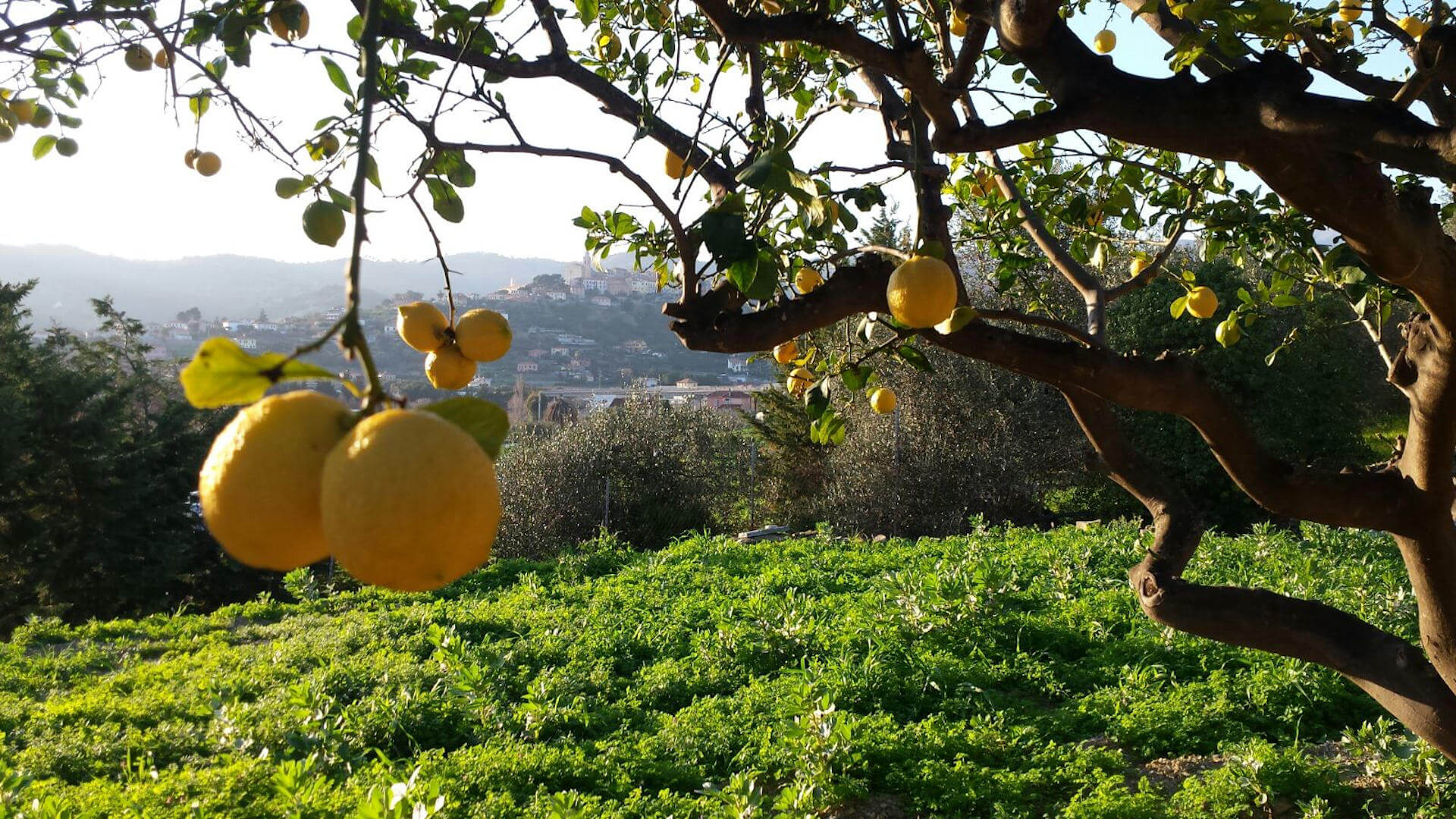
There is a scent that heralds the arrival of spring in Diano Marina: that of lemons slowly ripening in the sun, between the blue of the sea and the silvery green of the olive trees. Their golden foliage stands out in the gardens of our farm, where lemon cultivation is still carried out using ancient methods and a deep respect for nature.
Arriving from the East many centuries ago, lemon trees have adapted perfectly to the mild climate of the Gulf of Diano, becoming part of the landscape and local identity. On the land surrounding our vacation apartments in Diano Marina, these fragrant fruits grow thanks to the sun, the sea breeze, and the daily care we devote to each tree.
For us, growing lemons is not just a tradition: it is a way of experiencing the territory, recounting the most authentic soul of Liguria through the colors and flavors of our land.
The lemon tree in Liguria and its history
The lemon tree was imported to Liguria in the 15th century. Although production is not comparable to that of southern Italy, even here we cannot imagine our terraces without these precious fruits.
In western Liguria, citrus cultivation began to establish itself in the 17th century. The main market was Provence, but soon Ligurian lemons began to be exported overseas.
In the Ventimiglia area, in the early 18th century, the "Magistrato de' Limoni" (Lemon Magistrate) was established with the aim of governing the harvesting and sale of local production. Thanks to the creation of appropriate "Capitoli" (chapters), the products and their market price were protected.

The SPOL in Sanremo
In the 19th century, lemon producers in Sanremo organized themselves into a guild called Società Proprietari Orti di Limoni (S.P.O.L.). The team of "limunàri" consisted of:
-
five men and three women for harvesting
-
one or two mules for transport
-
a "càpu" who represented the owner
-
a "sensà" who acted as the buyer
-
a secretary of the SPOL
The men's job was to harvest the citrus fruits and place them in a large communal pile. The women, as is often the case, performed precision work: they used a cutter to cut the stalk and select the best fruits. Once the count was complete, the postal secretary gave the field owner a ticket with the number of fruits harvested. This allowed him to collect the amount due from the company's cashier.
Finally, the harvest was transported by mules or by women (called "camàle") who loaded the fruit onto their heads and carried it to the city for sale.
The lemons of the Cinque Terre
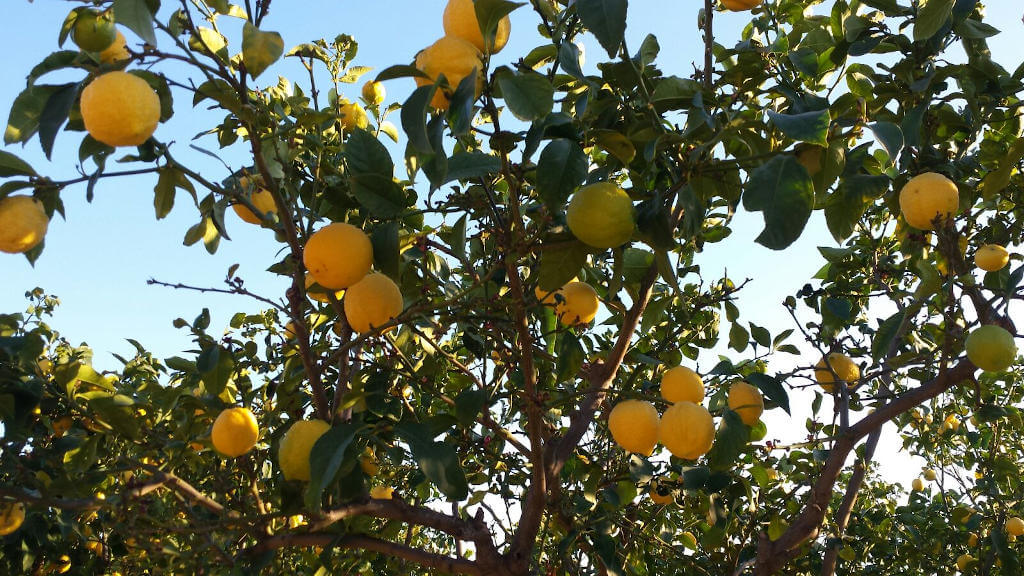
The lemons of the Cinque Terre are currently very popular and well known, particularly those from Monterosso, where an important festival is held in May.
We cannot fail to mention the Genoese poet Eugenio Montale, who dedicated a famous poem to lemons, making them a symbol of his aesthetic. It was in Monterosso that Montale spent his holidays with his family during his childhood and youth, and drew inspiration for his compositions.
Why sing of exotic flowers with high-sounding names, the poet asks us, when every day we have lemons before us to remind us of the beauty of simplicity?
How we care for our lemon trees
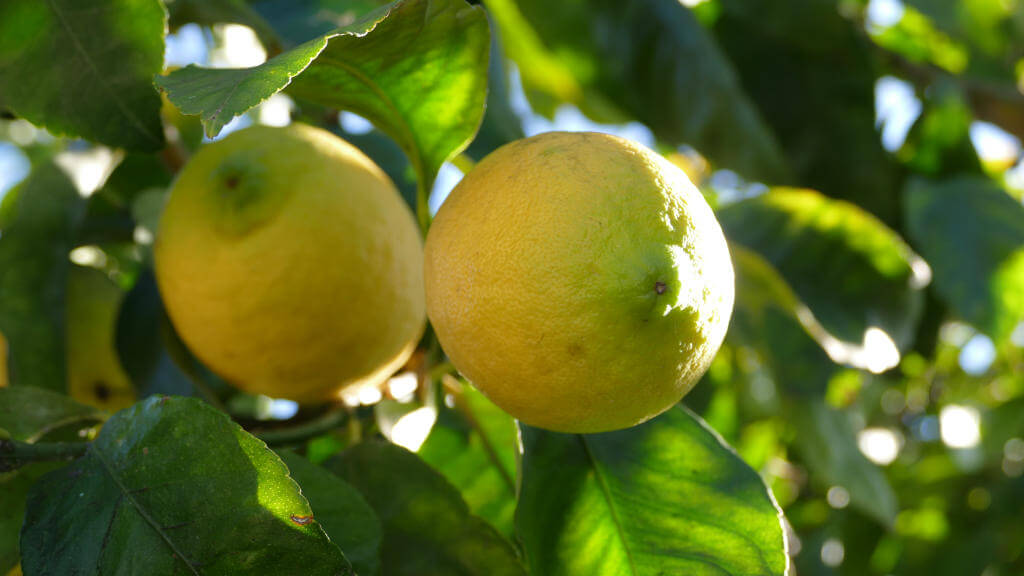
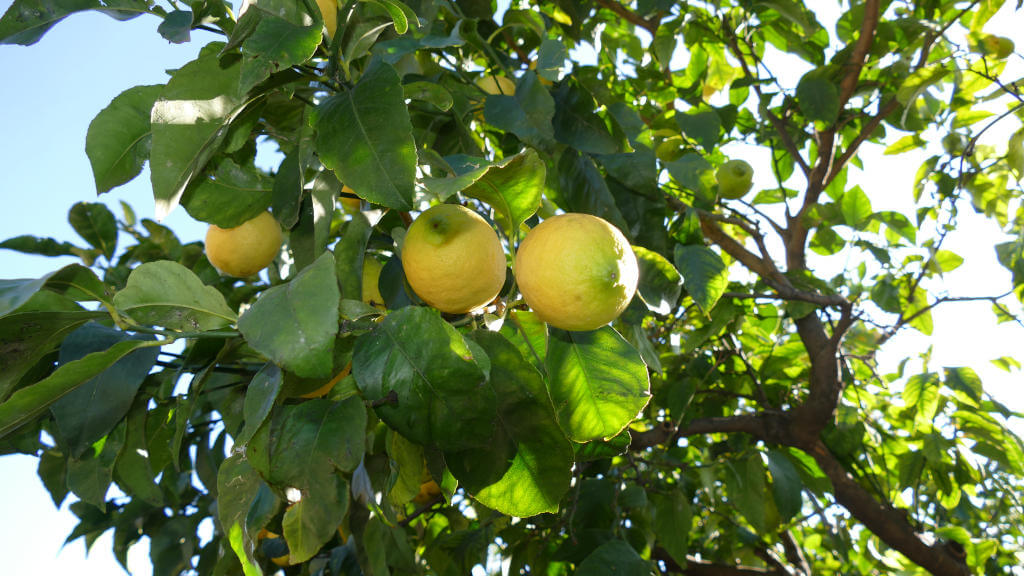
At our farm, we have about 20 lemon trees. They can be found everywhere, between the greenhouses and the house. We planted them 30 years ago, already large and grafted. They are of the 4 seasons variety and provide us with 2 to 10 quintals of lemons every year. This also depends greatly on the removal of their excess branches. It is a very resistant type of plant, which tolerates low temperatures well and bears fruit all year round. Just think, they do not need any pesticides, which means that even their peel is edible.
Pruning the plants
The only treatment our plants require is pruning. This is done once a year and is essential to ensure lush growth. The best time is at the end of winter, to allow the plant to regenerate with the arrival of spring. Suckers and shoots should be removed, as they take nutrients away from the other branches that produce flowers. Dry branches or those damaged by frost should also be cut with suitable shears. This will reinvigorate the plants and encourage them to bear fruit.
Flowering and harvesting: when yellow colors Liguria
The flowering of lemon trees is one of the most evocative moments of the year. Generally, between the end of winter and the beginning of spring, the branches are filled with small white flowers with an intense fragrance: it is a sign that a new fruit season is about to begin. In Liguria, thanks to the mild climate of the Gulf of Diano Marina , lemon trees can bloom several times a year, offering harvests at different times.
In our orchards, which produce fruit all year round, harvesting takes place when the lemons have reached the right level of ripeness and the peel turns a bright yellow. Harvesting is still done by hand, with care and patience, so as not to damage either the fruit or the branches of the tree.
Each crate of lemons reflects months of work and the daily care we devote to each tree.
Harvest time is also a cause for celebration: the intense colors, the scent in the air, and the light that illuminates the gardens make the Ligurian countryside even more vibrant. It is here that lemon cultivation in Liguria shows all its beauty: a perfect balance between nature, tradition, and passion.
Harvesting and selling
As we have already mentioned, our trees produce lemons all year round. Harvesting is therefore not limited to a particular season and does not involve any particular difficulties. We pick the fruit from the tree when it is fully ripe. Lemons can stay on the tree for a long time, but they can also ripen after being picked from the branches. For this reason, in intensive cultivation, citrus fruits are often harvested while still green and then handled and treated with products that make it unsafe to eat the peel.

As our farmhouse guests are well aware, this is not the case here. Our lemons are organic, and we are happy to offer a welcome basket to those staying at the farmhouse.
As we do not have a large number of trees, we cannot guarantee distribution to supermarkets, so we prefer to focus on direct sales of lemons in Diano Marina .
One way to get even closer to the customers and guests of Agriturismo Le Girandole is to guarantee them the scent and taste of our lemons.
The lemons of our farmhouse: quality and sustainability
At our farm, lemon cultivation is a tradition that is renewed year after year, in harmony with nature. The plants grow surrounded by the greenery of the Gulf of Diano, where the mild climate and mineral-rich soil provide the ideal conditions for fragrant, intensely colored fruit.
Some of our lemons
We grow our lemons using simple, environmentally friendly methods, without resorting to chemical pesticides or aggressive treatments. We take care of the plants in a natural way, preserving the health of the soil.
This sustainable approach allows us to offer genuine lemons with an authentic taste and edible peel. Each fruit reflects the passion and attention we devote to our farm, where hospitality is combined with a love for the land and the flavors of Liguria.
Listen to all podcasts published on our official channels: