Agricultural production
Broad Beans from Agriturismo Le Girandole, Diano Marina
January 07, 2026
Among the rows of crops surrounding our farm in Diano Marina, spring brings with it one of the most eagerly awaited moments of the year: the broad bean harvest. It is a tradition that is repeated every season, when the soil yields the fruit of months of care, sowing, and waiting.
The cultivation of broad beans in open fields is an ancient practice that still retains all its charm today. In Liguria, these plants find an ideal habitat: a mild climate, well-drained soil, and the right balance of sun and humidity. For generations, broad beans have been part of rural life, becoming the stars of vegetable gardens, terraces, and spring tables.
Today, we will tell you how we grow broad beans in our fields in Diano Marina, from the first autumn sowing to the harvest. A short journey into the heart of our agricultural production, where tradition and sustainability continue to grow side by side.

The broad bean plant and its important nutritional properties
Belonging to the Fabaceae family, or legumes, broad beans have been cultivated throughout the Mediterranean basin since ancient times. Their satiating power and high protein content make them a nutritious and complete dish, especially when accompanied by a good portion of cereals. The only contraindications are for those suffering from favism, a severe form of anemia linked in part to the congenital absence of an enzyme.
In the Gulf of Diano, broad beans are grown in both private gardens and greenhouses, thanks to the mild climate and their high yield.
When to grow broad beans
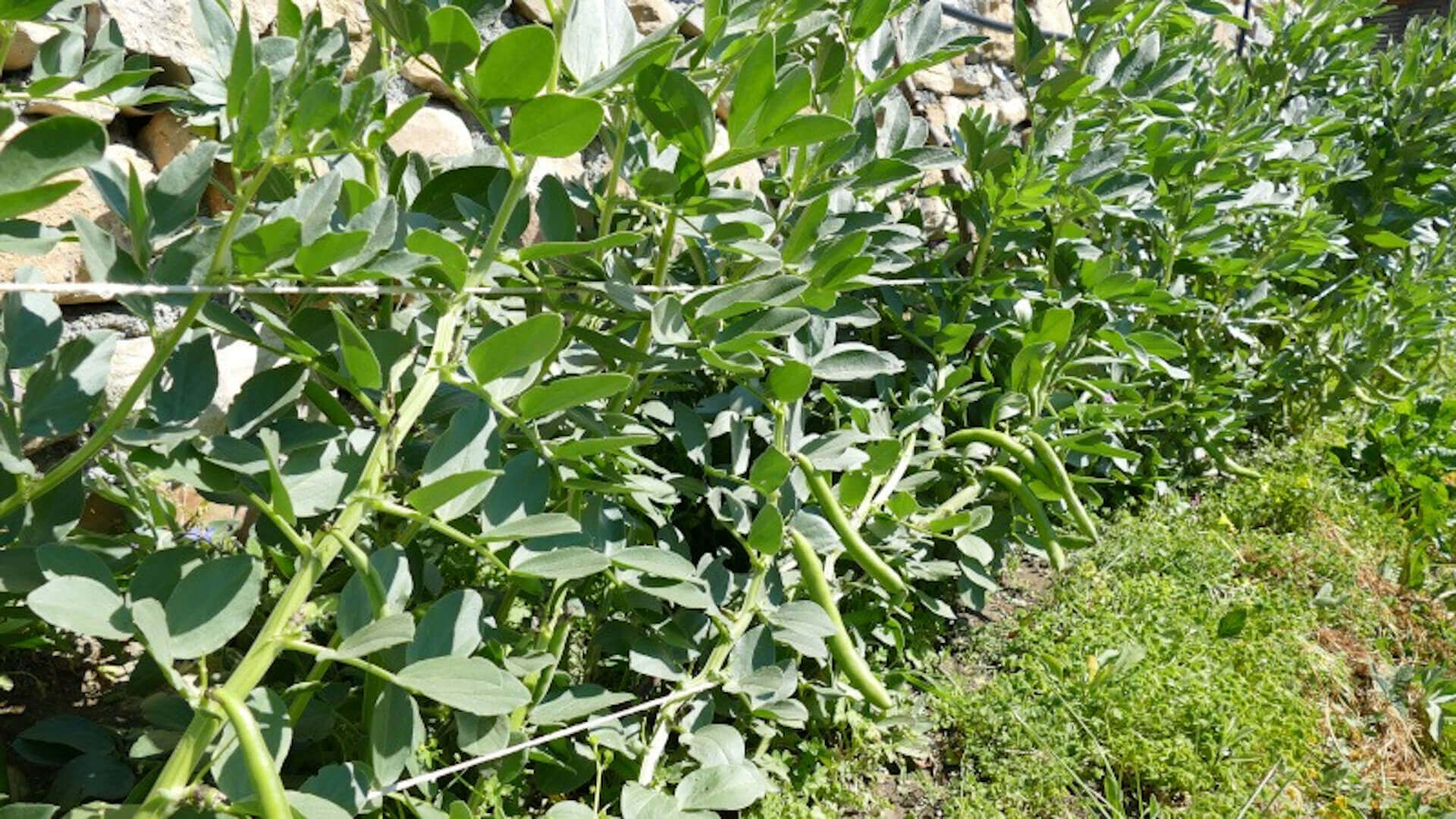
We plant our broad beans in the open field in September, in an area of about 800 square meters. We also grow artichokes at the same time, because both plants suffer from high temperatures and tolerate low temperatures. Broad beans can withstand temperatures as low as 3-5 degrees below zero, which is definitely an advantage for our farm in Diano Marina from a production point of view.
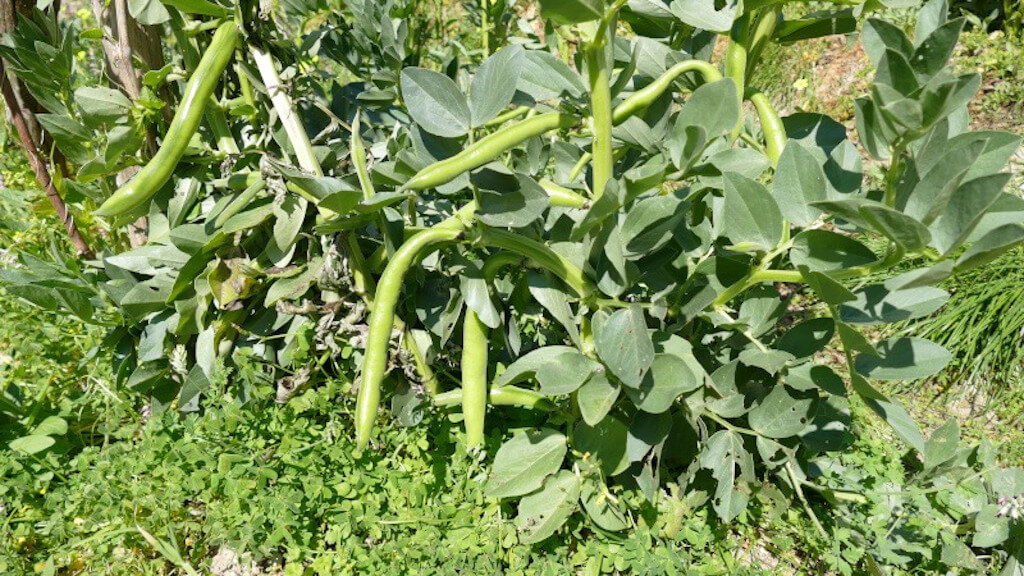
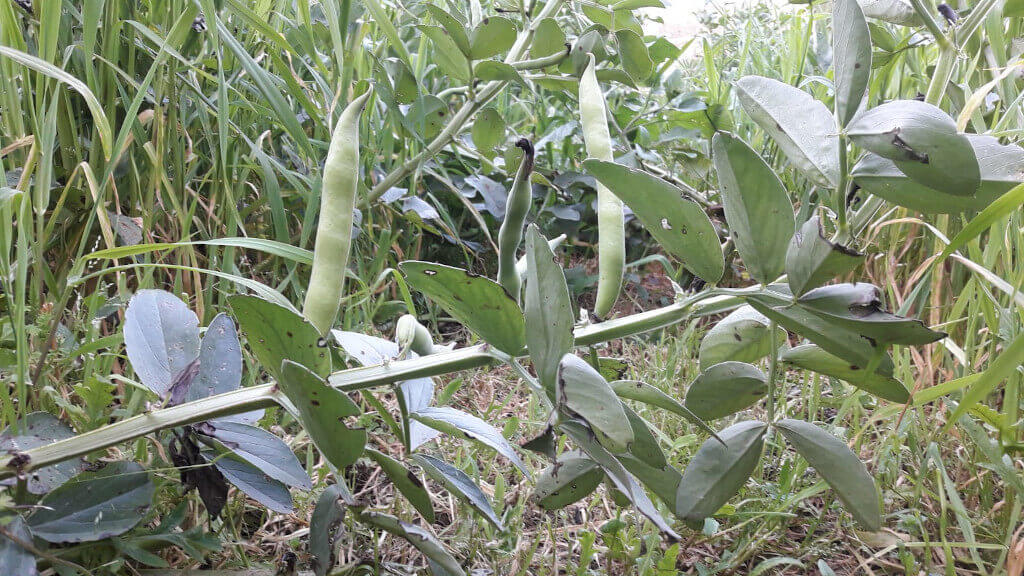
At the beginning of January, we begin to see that the pods have reached maturity, but harvesting must still wait. The growing cycle is 26 weeks long, so we can only proceed in mid-March. At this point, we will notice that the plant has reached a height of up to one and a half meters, while we expect to find pods up to 30 centimeters long. Each of these will contain 3 to 10 flattened seeds, green or brown in color. We can already enjoy them fresh, or let them dry to enrich our supply of legumes.
What type of soil is best suited for growing broad beans
Growing broad beans is perhaps one of the easiest tasks because it does not require any special care and can be done in many types of soil. However, we have noticed that clay soils are the most suitable, thanks to their ability to retain a lot of water. This aspect is really important for the optimal development of the plant. If the soil intended for growing broad beans is too dry, however, an adequate irrigation system should be used.
How to nourish the soil
The soil does not need any special treatment, nor does it need to be nourished with manure or professional potting soil. The taproots of the broad bean (composed of thick, more developed main axes) have lateral branches that contain bacteria capable of fixing nitrogen in the soil. This means that the broad bean plant is responsible for the fertility of the soil in which it grows. Furthermore, thanks to its extensive vegetative development, it is able to suffocate weeds, making weeding unnecessary.
The role of broad beans in naturally enriching the soil
Growing broad beans is not just about bringing a typical Ligurian product to fruition, but also about caring for the land. This plant plays a valuable role in soil fertility: during its growing cycle, the roots of broad beans release nutrients into the soil and help to increase the presence of natural nitrogen.
This is a spontaneous and sustainable process that does not require the use of chemicals. For this reason, the cultivation of broad beans is an important part of the daily agricultural work on our farm: it helps the soil to regenerate, keeping it alive and productive for the following seasons.
This is a concrete example of how farming traditions still interact with nature today, enhancing the land of Diano Marina with simple and environmentally friendly methods.
Our harvested broad beans
Harvesting
The broad beans are harvested by hand and, as we have said, this takes place in spring, between March and April. They are selected primarily on the basis of size: we harvest the largest plants first, while leaving the smaller ones to grow a little longer. To cut them correctly and avoid damaging them, we hold the stem firmly and pull it off gently. This step should not be underestimated, because if we do not proceed with care, the plant could break.
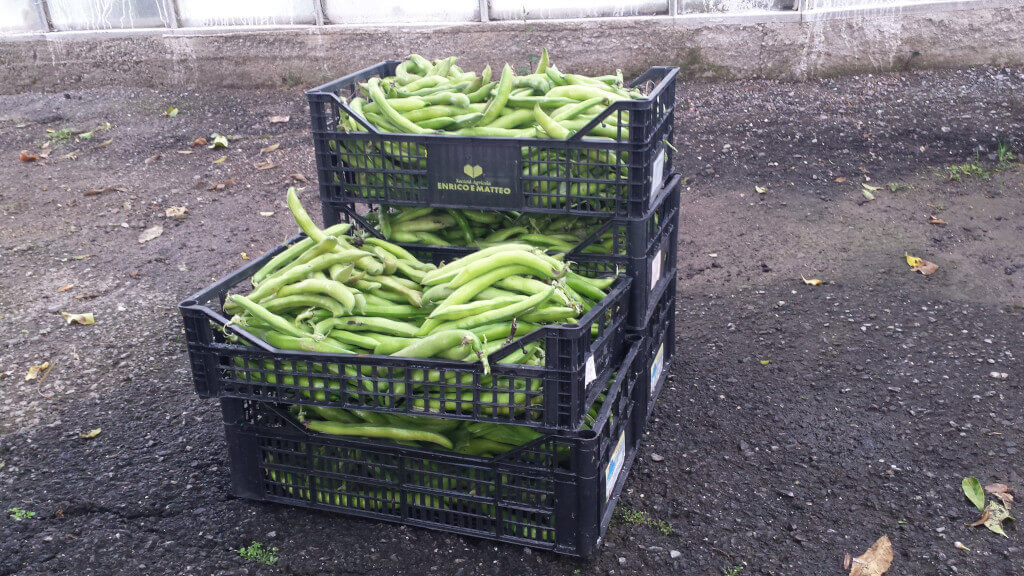
Once we have chosen the best pods, we place them in crates, which we wet with water in the evening and leave outside. This step allows the broad beans to stay fresh longer.
Sales
We have always guaranteed direct sales of our broad beans. Production is not sufficient to satisfy large markets, so our customers are mainly local consumers.
There are many ways to eat broad beans: freshly picked, raw with salt, cooked in soups and salads. But we always recommend the recipes of our farming grandparents with a smile. For example, combine broad beans with salami and a good glass of red wine. Can't you already smell the aroma of home?
From harvest to table: how to store and use fresh broad beans
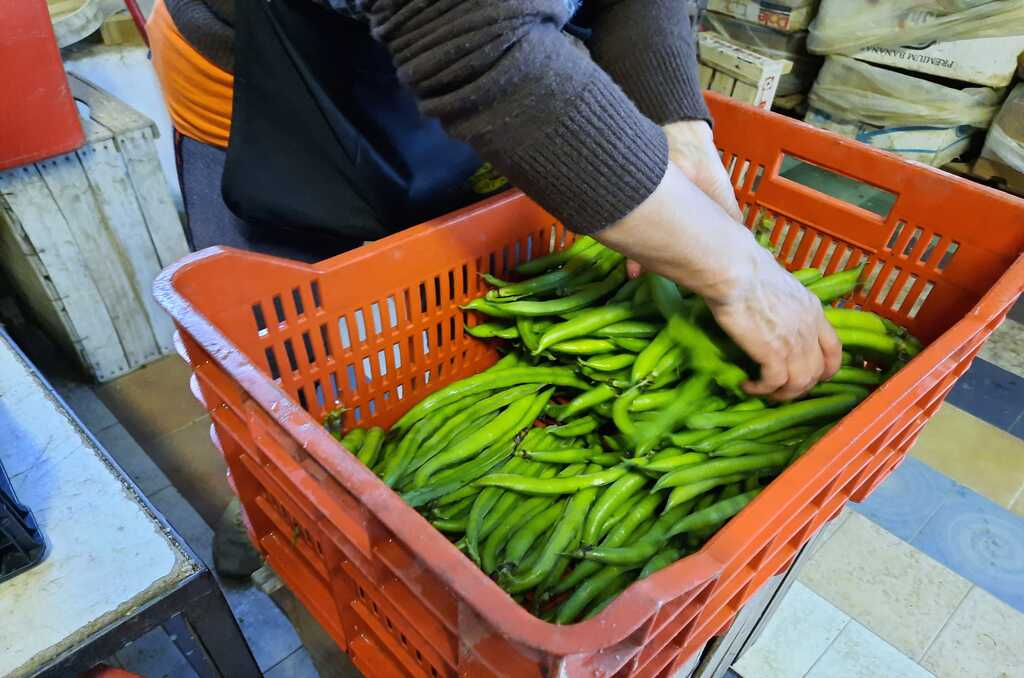
Harvesting broad beans is one of the most rewarding moments of working in the fields. After months of care and waiting, the pods reach the right stage of ripeness and can be picked by hand, one by one, directly from the plants. This is how we do it here, on the grounds of Agriturismo Le Girandole, following the natural rhythm of the season and respecting the timing of the earth.
Fresh broad beans should preferably be eaten within a few days of harvesting, when they are still tender and sweet. To store them properly, they can be placed in the refrigerator, inside a paper bag or a breathable container, avoiding excessive moisture. Alternatively, they can be shelled and frozen, so they can be enjoyed in the following months without losing their flavor.
In Liguria, freshly picked broad beans are the stars of one of the simplest and most beloved traditions: broad beans and cheese, a combination that marks the arrival of spring and reflects the authentic link between the land and the table.
A daily gesture, but also a symbol of our agricultural philosophy: cultivating and sharing, respecting nature and the genuine flavors of Diano Marina.
Broad bean cultivation and agricultural sustainability
Broad bean cultivation has always been a concrete example of sustainable agriculture, combining productivity with respect for the environment. This plant requires few resources and naturally contributes to soil health, improving its structure and promoting biodiversity.
In the fields of our farm, the cultivation of broad beans follows the same principle that guides all our production: working in harmony with nature, minimizing artificial interventions and letting the rhythm of the seasons dictate the timing.
Thanks to their ability to fix nitrogen in the soil, broad beans help to regenerate soil fertility and maintain a natural balance between crops. It is a small but significant contribution to a model of agriculture that looks to the future, without forgetting the traditions that have always characterized our land in Diano Marina.
A choice that reflects the most authentic value of our work: cultivating with respect, preserving the richness and vitality of the Ligurian landscape every day.
Listen to all podcasts published on our official channels: