Agricultural production
Greenhouse cultivation of basil in Diano Marina: our experience
February 14, 2026
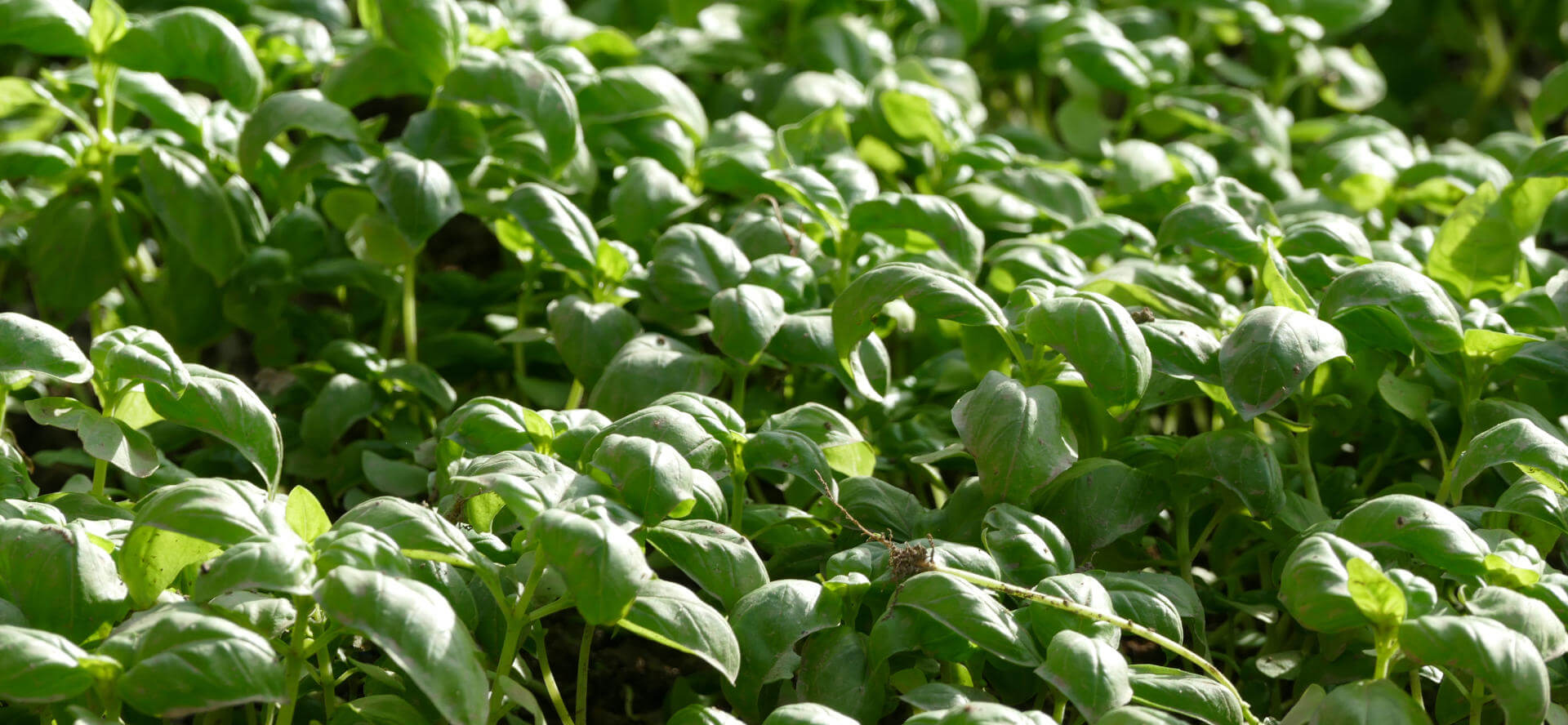
Basil is our most important product. We have been growing it since 1967 and since then we have never stopped caring for this precious plant with passion. Over the years, we have grown as farmers, learning and perfecting cultivation techniques. This passion and total dedication to the production of our basil has led us to join the Genovese Basil PDO consortium.
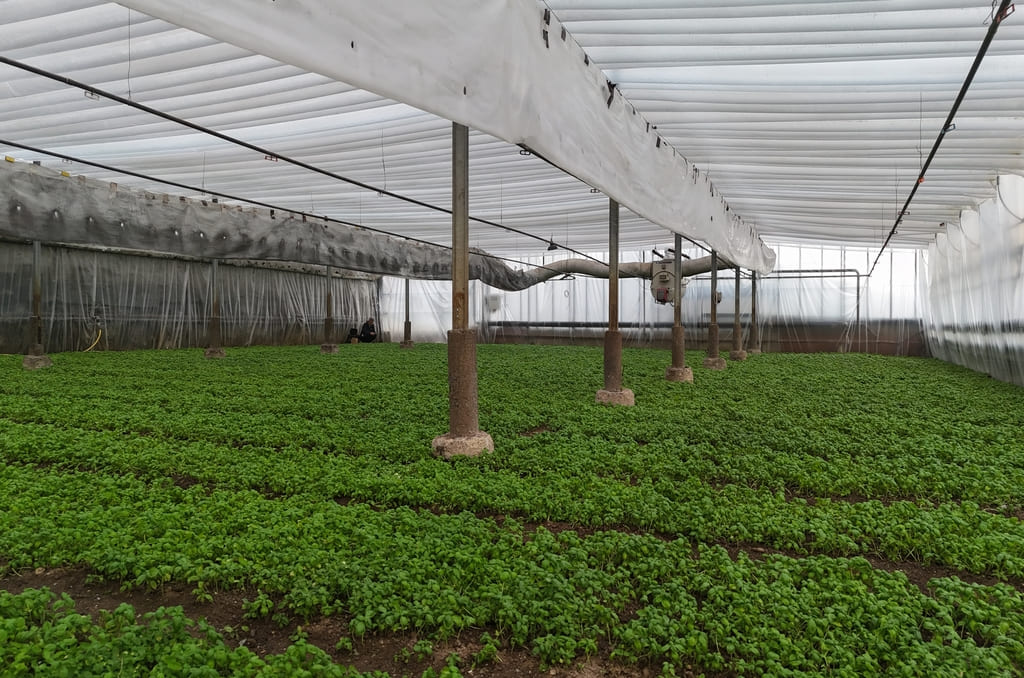
In this article, we will explain in detail how our precious basil is grown in greenhouses on our farm in Diano Marina, even during the winter season.
A 360° view of our basil greenhouses
Genovese Basil PDO: Ligurian excellence grown in our greenhouses
Among the most prized varieties grown in our greenhouses is Genovese Basil PDO, one of Liguria's most representative agricultural products. It is a cultivar recognized throughout Europe for its unique characteristics: small, tender, light green leaves with a delicate aroma and no menthol notes, ideal for preparing traditional Genovese pesto.
To obtain the protected designation of origin, cultivation must take place exclusively in Liguria, following traditional methods that comply with European regulations, from sowing to harvesting. Irrigation, soil quality, and manual processing of the leaves also contribute to preserving the aromatic properties of this plant.
In the greenhouses of our farmhouse in Diano Marina , we carefully follow all stages of production, ensuring fresh, fragrant basil grown in full respect of local traditions. Basilico Genovese DOP is therefore not only a symbol of our agricultural identity, but also an authentic link with the Gulf of Diano Marina area.
How our basil is produced
In the collective imagination, basil is associated with summer. Its bright green color and scent inevitably remind us of the hottest season. However, when grown in a greenhouse, basil can be consumed throughout the year.
This is because our plant needs a minimum temperature of around 16-18 degrees to grow. Its roots suffer from waterlogging and its leaves prefer warm air. For this reason, we grow basil in greenhouses at a constant temperature of between 20 and 22 degrees. The temperature in our greenhouses is regulated by heating, shading, and insulation systems.
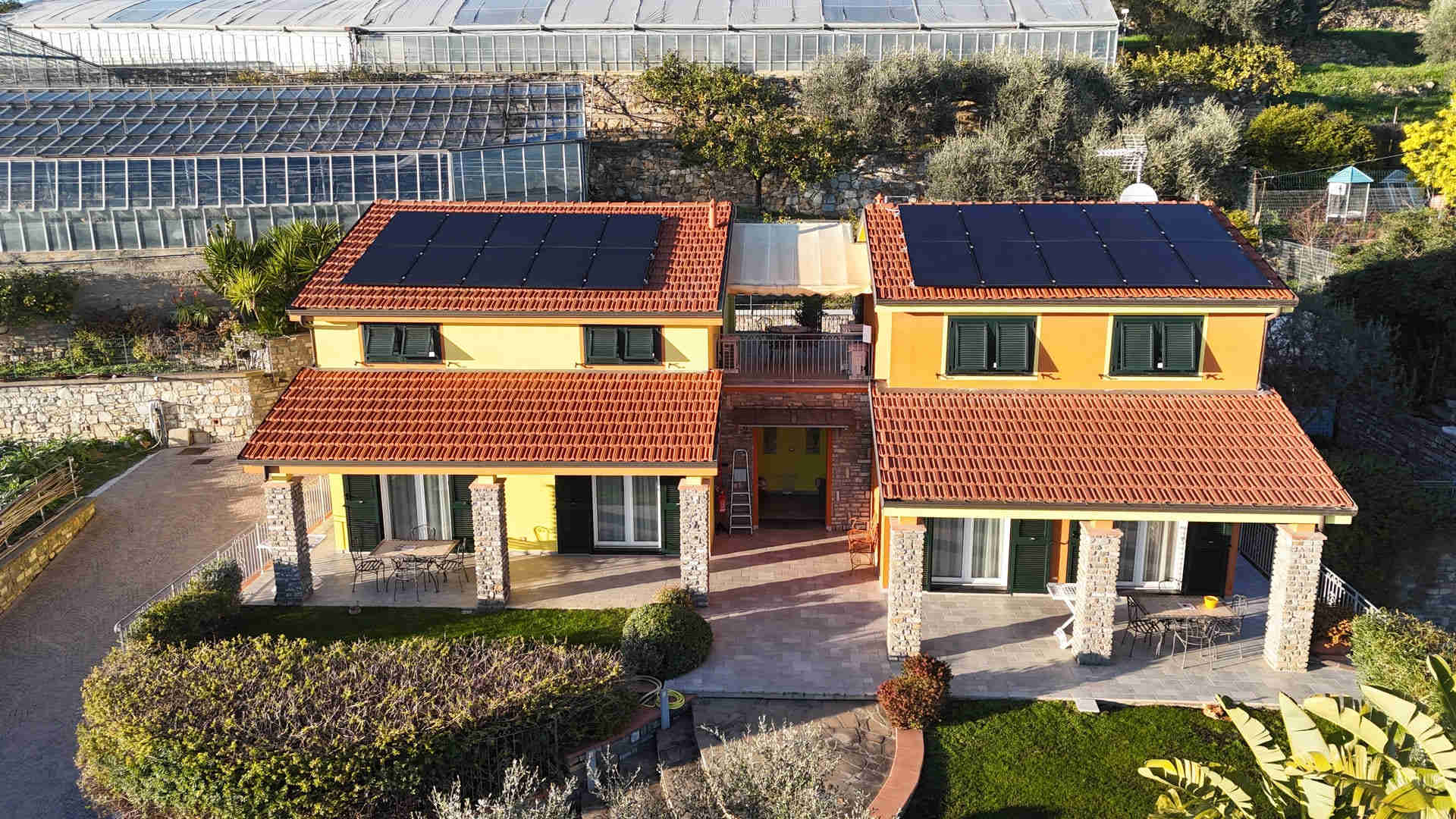
Our basil greenhouses seen from above
Preparing the greenhouse
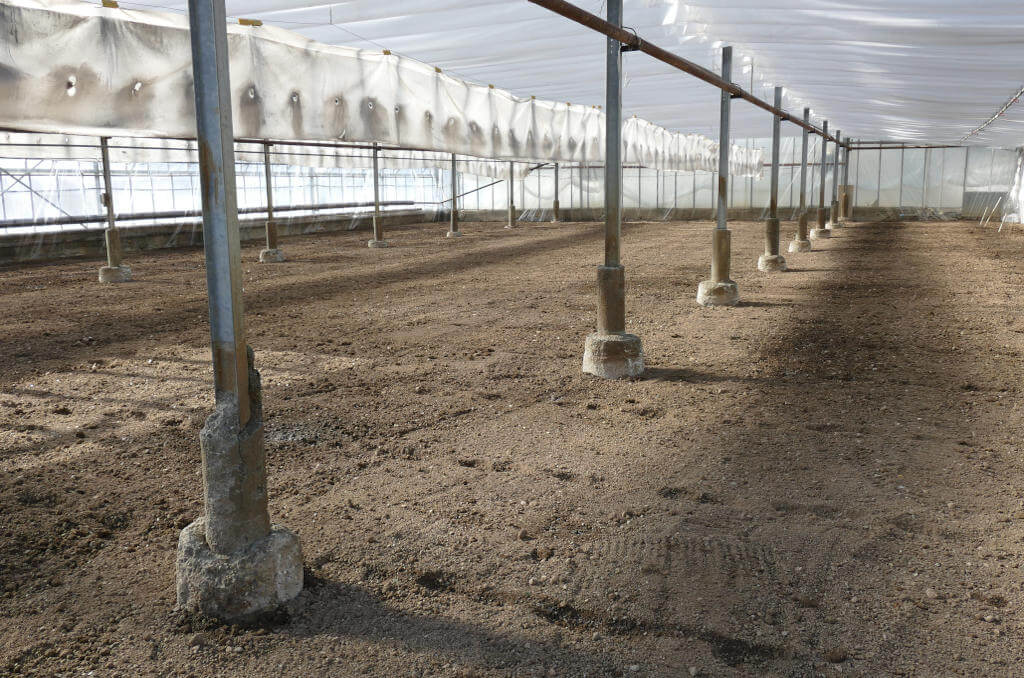
The first stage in growing basil consists of preparing the soil inside the greenhouse. We use a tractor to turn the soil several times to soften it, then level it with a roller. The soil must be flat so that the seedlings can be distributed evenly.
At this point, we can proceed to sow our basil manually. At this stage, we make sure that there is enough space between the rows inside the greenhouse to facilitate harvesting, which is also done manually.
Irrigation
Irrigation of our basil in greenhouses is also done manually. This is especially true when the plant is small and during the winter season, in order to avoid water stagnation. During the warmer months, however, and when the plant is taller, we prefer to use automatic systems, varying the flow according to the temperature and the amount of sunlight.

Harvesting and packaging
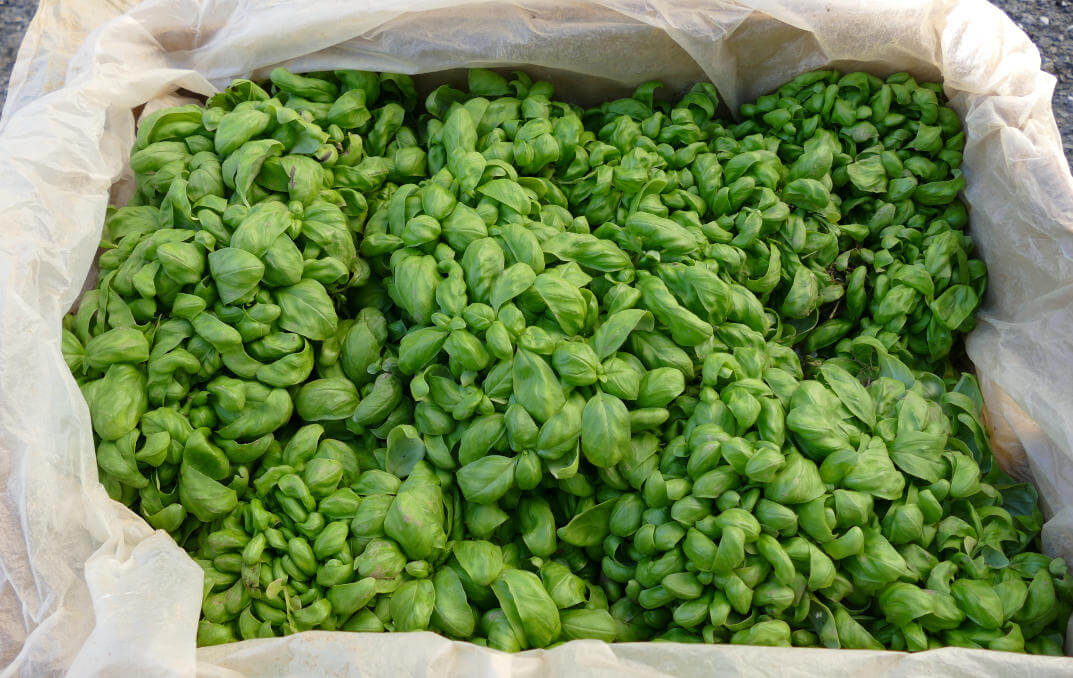
Basil seedlings are harvested manually after about twenty days during the winter season, and after ten to fifteen days in the summer. Once the plant has reached the appropriate size, it is extracted complete with roots.
This video shows the harvesting of basil, which will then be packaged.
We can now proceed with packaging. We divide our plants into bunches of varying sizes, depending on our needs. To preserve the freshness of the product and prevent dehydration, we use inert food-grade paper.

Distribution and direct sale of Genovese Basil PDO in Diano Marina
Our basil is sold to restaurants, pizzerias, kiosks, and beach bars in our area during the summer, while in winter we focus on production for intermediaries in Genoa and Turin, who distribute our product to various supermarkets.
For us, growing basil is not just a source of income. It is a source of pride, a constant stimulus that drives us to improve. The scent of its leaves reminds us of home, and the sacrifice that this work entails is rewarded by the bond with a territory that grows stronger with each passing year.
For this reason, we work hard to ensure the direct sale of our basil to anyone who wants to buy it from our company.
Sustainable cultivation and respect for the environment
The cultivation of basil in our greenhouses is guided by a principle of balance between productivity and respect for the environment. Every stage of the work, from soil preparation to irrigation, is carefully managed to preserve the quality of the product and the health of the soil. The aim is to maintain a production cycle that makes the most of natural resources and guarantees healthy, fragrant basil that is in harmony with the Diano Marina area.
Working in direct contact with the earth reminds us every day of the importance of conscious agriculture, capable of combining tradition and innovation without ever losing sight of environmental protection. It is a daily commitment that is reflected in the care with which we cultivate each seedling, respecting the landscape and natural rhythms that have always characterized Liguria.
The link between basil and Ligurian tradition
In Liguria, basil is much more than an ingredient: it is an integral part of the cultural and gastronomic identity of the region. For centuries, this aromatic plant has been cultivated along the coast, where the mild climate, sun exposure, and sea breeze create the ideal conditions for developing its characteristic aroma and delicate flavor.
Basil is the undisputed star of pesto alla genovese, one of the most famous Italian recipes in the world and a symbol of Ligurian cuisine. Its cultivation is deeply linked to the daily life of local families, who have handed down knowledge, techniques, and traditions related to working the land for generations.
This connection is still alive in the Gulf of Diano Marina: basil cultivation is part of the agricultural landscape and helps to keep alive a rural culture that has been able to adapt to the times while preserving the same care and authenticity of the past.
Growing basil in Liguria means preserving a part of local history: ancient knowledge that is renewed every day in the greenhouses, the scent of the earth, and the passion of those who cultivate it. At Agriturismo Le Girandole, this connection with nature and tradition becomes a tangible experience, made up of simple and authentic gestures that reveal the true soul of the Gulf of Diano.
Listen to all podcasts published on our official channels: